
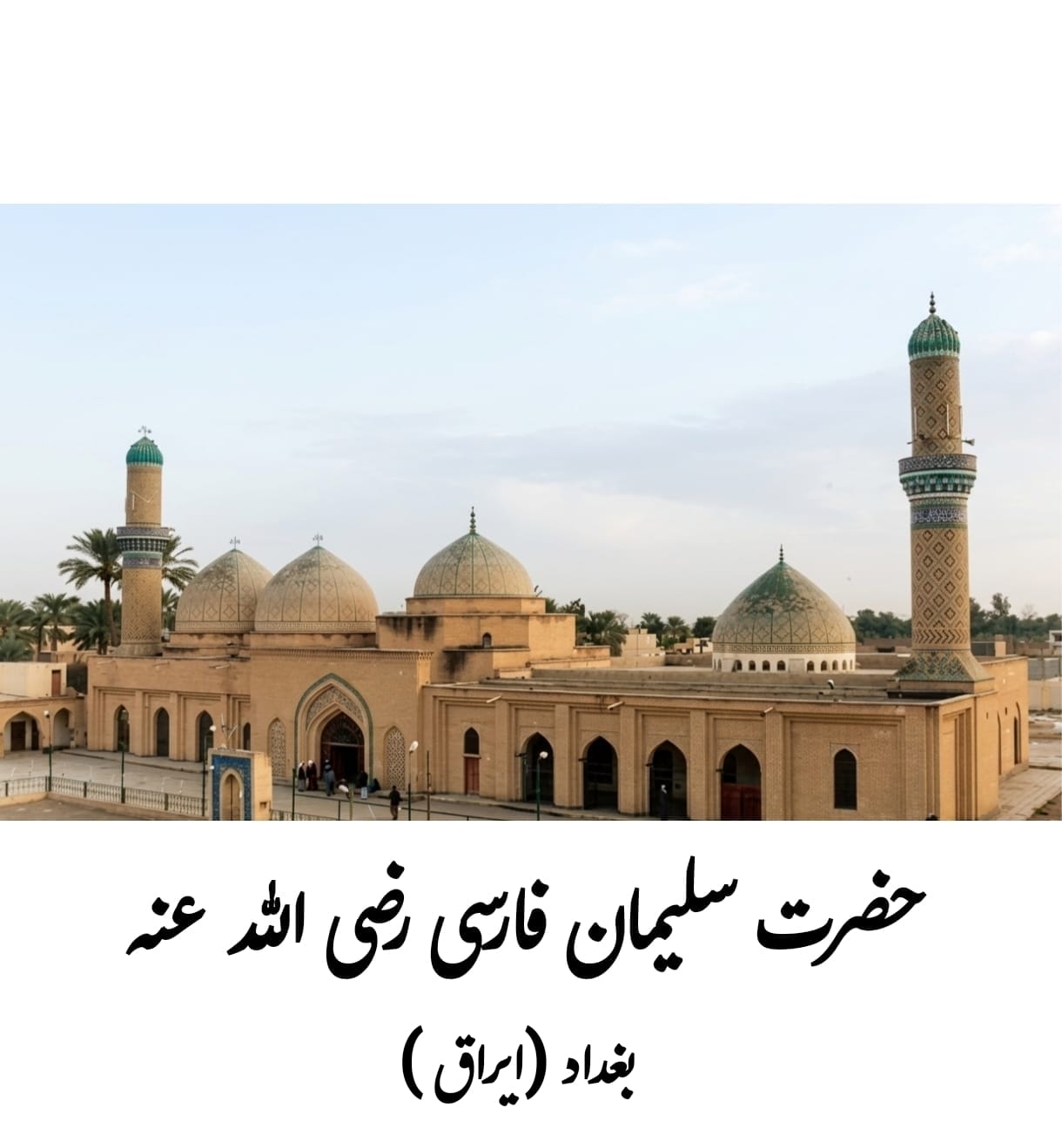
Salman al-Farsi (رضي الله عنه) is known as the Imam, the Flag of Flags, the Inheritor of Islam, the Wise Judge, the Knowledgeable Scholar, and One of the House of the Prophet (صلى الله عليه وسلم). These were all titles the Prophet (صلى الله عليه وسلم) gave him. He stood fast in the face of extreme difficulties and hardships to carry the Light of Lights and to spread the secrets of hearts to lift people from darkness to light. He was a noble companion of the Prophet (صلى الله عليه وسلم). He reported sixty of his sayings.
He came from a highly respected Zoroastrian family from a town near Ispahan. One day while passing by a church, he was attracted by the voices of men praying. Drawn by their worship, he ventured in and found it better than the religion of his upbringing. On learning that the religion originated in Syria, he left home, against his father’s wishes, went to Syria and associated himself with a succession of Christian anchorites. He came to know from them the coming of the last Prophet (صلى الله عليه وسلم) and the signs accompanying his advent. He then traveled to Hijaz where he was seized, sold into slavery, and taken to Madina, where he eventually met the Prophet (صلى الله عليه وسلم). When he found in the Prophet (صلى الله عليه وسلم) the fulfillment of all the signs of which he had been informed by his Christian teachers, he affirmed the testification of faith – Shahada. Servitude prevented Salman (رضي الله عنه) from being at the battles of Badr and Uhud. The Apostle (صلى الله عليه وسلم) helped him gain his release from slavery by planting with his own hand three hundred palm trees and giving him a large piece of gold. Once a free man he took part in every subsequent battle with the Prophet (صلى الله عليه وسلم).
In Ibn Ishaq’s Sirat Rasul Allah, we find the following in Salman’s (رضي الله عنه) account to the Prophet (صلى الله عليه وسلم) of his journey in search of the true religion:
“Asim ibn Umar ibn Qatada said that he was told that Salman the Persian (رضي الله عنه) told the Prophet (صلى الله عليه وسلم) that his master in ‘Ammuriya told him to go to a certain place in Syria where there was a man who lived between two thickets. Every year as he used to go from one to the other, the sick used to stand in his way and everyone he prayed for was healed. He said, ‘Ask him about this religion which you seek, for he can tell you of it.’ So I went on until I came to the place I had been told of, and I found that people had gathered there with their sick until he came out to them that night passing from one thicket to the other. The people came to him with their sick and everyone he prayed for was healed. They prevented me from getting to him so that I could not approach him until he entered the thicket he was making for, but I took hold of his shoulder. He asked me who I was as he turned to me and I said, ‘God have mercy on you, tell me about the Hanafiya, the religion of Abraham.’ He replied, ‘You are asking about something men do not inquire of today; the time has come near when a prophet will be sent with this religion from the people of the Haram. Go to him, for he will bring you to it.’ Then he went into the thicket. The Prophet (صلى الله عليه وسلم) said to Salman (رضي الله عنه), ‘If you have told me the truth, you met Jesus the son of Mary.’”
In one of the Prophet’s (صلى الله عليه وسلم) battles called al-Ahzab or al-Khandaq Salman (رضي الله عنه) advised the Prophet (صلى الله عليه وسلم) to dig trenches around Madinah in defense of the city, a suggestion which the Prophet (صلى الله عليه وسلم) happily accepted. He then went ahead and helped the digging with his own hands. During this excavation, Salman (رضي الله عنه) struck upon a rock which he was unable to break. The Prophet (صلى الله عليه وسلم) took an axe and hit it. The first strike brought forth a spark. He then hit it a second time and brought forth a second spark. He then struck for the third time and brought forth a third spark. He then asked Salman (رضي الله عنه), ” O Salman, did you see those sparks?” Salman (رضي الله عنه) replied, “Yes, O Prophet (صلى الله عليه وسلم), indeed I did.” The Prophet (صلى الله عليه وسلم) said, “The first spark gave me a vision in which Allah has opened Yemen for me. With the second spark, Allah opened Sham and al-Maghreb (the West). And with the third one, Allah opened for me the East.”
Salman (رضي الله عنه) reported that the Prophet (صلى الله عليه وسلم) said: “Nothing but supplication averts the decree, and nothing but righteousness increases life,” and “Your Lord is munificent and generous, and is ashamed to turn away empty the hands of a servant when he raises them to him.” Tirmidhi transmitted them.
At-Tabari recounts that in the year 16 A.H. the Muslim army turned to the Persian front. In order to confront the Persian king at one point the Muslim army found itself on the opposite bank of the great Tigris River. The commander of the army, Sad Ibn Abi Waqqas (رضي الله عنه), following a dream, ordered the entire army to plunge into the rushing river. Many people were afraid and hung back. Saَ d (رضي الله عنه), with Salman (رضي الله عنه) by his side, prayed first: “May Allah grant us victory and defeat His enemy.” Then Salman (رضي الله عنه) prayed: “Islam generates good fortune. By Allah, crossing rivers has become as easy for the Muslims as crossing deserts. By Him in whose hand lies Salman’s soul, may the soldiers emerge from the water in the same numbers in which they entered it.” Sa`d (رضي الله عنه) and Salman (رضي الله عنه) then plunged into the Tigris. It is reported that the river was covered with horses and men. The horses swam and when they tired the river floor seemed to rise up and support them until they regained their breath. To some it seemed that the horses rode effortlessly on the waves. They emerged on the other bank, as Salman (رضي الله عنه) had prayed, having lost nothing from their equipment but one tin cup, and no one having drowned.
They went on to take the Persian capital. Salman (رضي الله عنه) acted as spokesman and said to the conquered Persians: “I have the same origin as you. I shall be compassionate toward you. You have three options. You may embrace Islam, then you will be our brethren and you will have the same privileges and obligations as we. Or you may pay the Jizyah tax and we will govern you fairly. Or we will declare war on you.” The Persians, having witnessed the miraculous crossing of the Muslim army, accepted the second alternative.
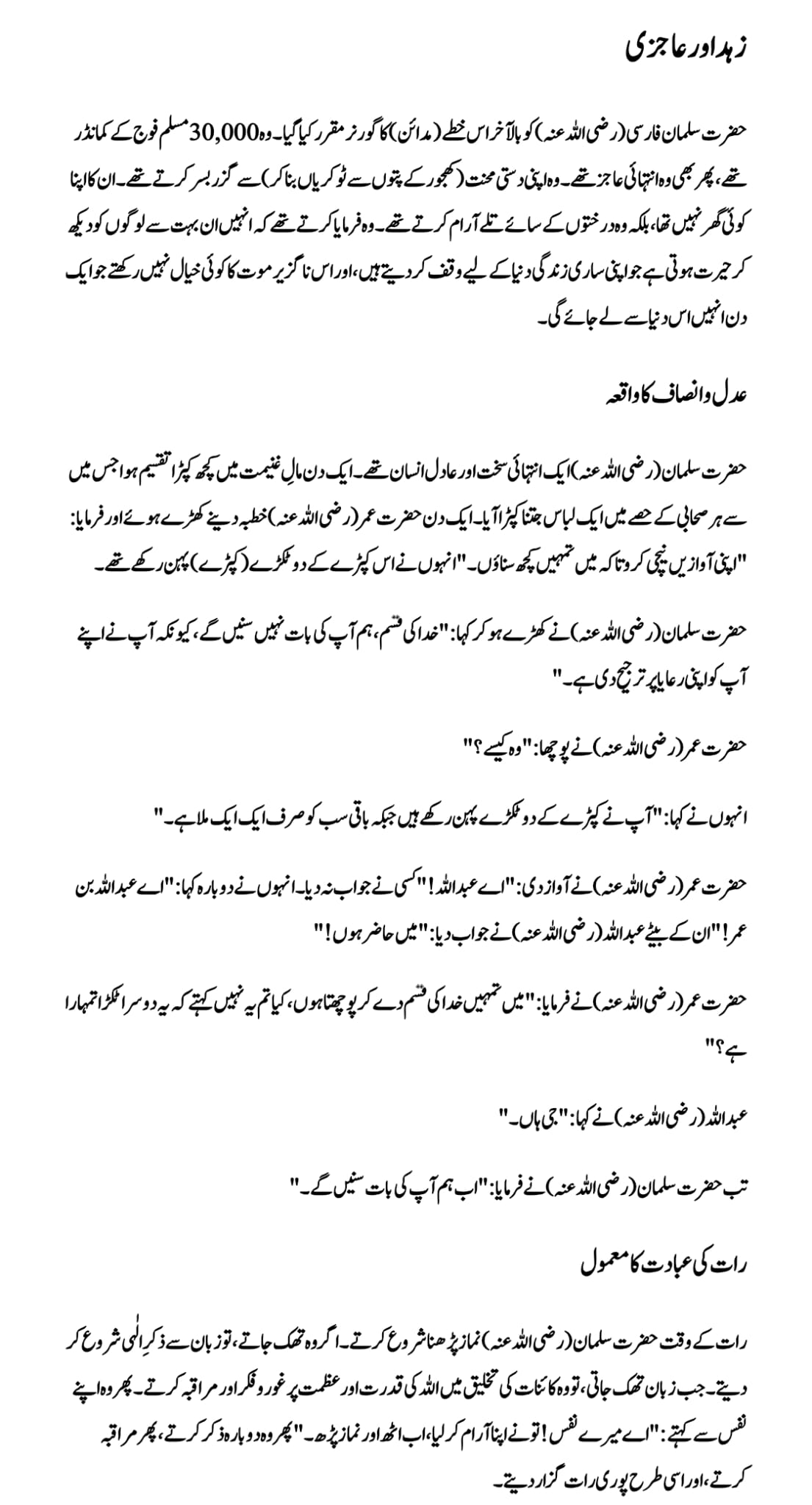
Salman al-Farsi (رضي الله عنه) was eventually appointed governor of that region. He was the commander of 30,000 Muslim troops. Yet, he was very humble. He lived from his own manual labor. He did not own a house, but instead rested under the shade of trees. He used to say that he was surprised to observe so many people spending all their life for the lower world, without a thought for the inevitable death which will take them from the world one day.
Salman (رضي الله عنه) was a very strict and just man. Among some spoils which were distributed one day was cloth out of which each companion had one piece of clothing cut. One day Umar (رضي الله عنه) got up to speak and said: “Lower your voices so that I may hear you.” He was wearing two pieces of that cloth. Salman (رضي الله عنه) said, “By God, we will not hear you, because you prefer yourself to your people.” “How is that?” asked Umar (رضي الله عنه). He said: “You are wearing two pieces of cloth and everyone else is wearing only one.” Umar (رضي الله عنه) called out: “O Abdullah!” No one answered him. He said again, “O Abdullah ibn Umar!” Abdullah (رضي الله عنه), his son called out: “At your service!” Umar (رضي الله عنه) said, “I ask you by God, don’t you say that the second piece is yours?” Abdullah (رضي الله عنه) said “Yes.” Salman (رضي الله عنه) said: “Now we shall hear you.”
At night Salman (رضي الله عنه) would begin to pray. If he got tired, he would start making dhikr by tongue. When his tongue would get tired, he would contemplate and meditate on Allah’s power and greatness in creation. He would then say to himself, “O my ego, you took your rest, now get up and pray.” Then he would make dhikr again, then meditate, and so forth all night long.
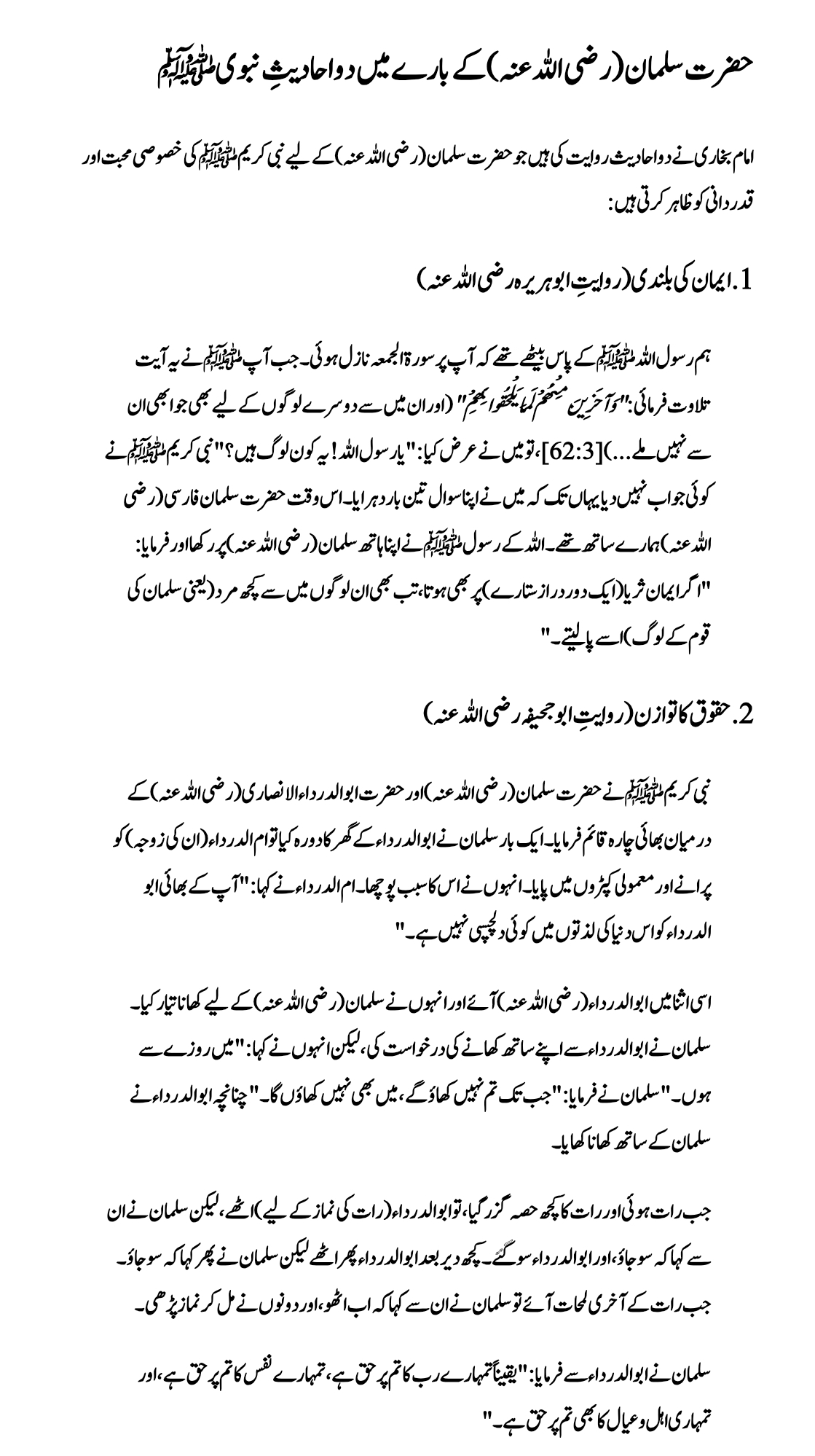
Bukhari relates two hadiths which show the Prophet’s (صلى الله عليه وسلم) consideration for Salman (رضي الله عنه):
Abu Huraira (رضي الله عنه) relates:
While we were sitting with the Holy Prophet (صلى الله عليه وسلم), Surat al-Jumu`a was revealed to him. When the Prophet (صلى الله عليه وسلم) recited the verse, “And He (Allah) has sent him (Muhammad) also to others (than the Arabs)…” [62:3] I said, “Who are they, O Allah’s Apostle?” The Prophet (صلى الله عليه وسلم) did not reply till I repeated my question thrice. At that time Salman al-Farsi (رضي الله عنه) was with us. Allah’s Apostle (صلى الله عليه وسلم) put his hand on Salman (رضي الله عنه), saying: “If faith were at ath-Thurayya (the Pleiades, very distant stars), even then some men from these people (i.e. Salman’s folk) would attain it.”
Abu Juhayfa (رضي الله عنه) relates:
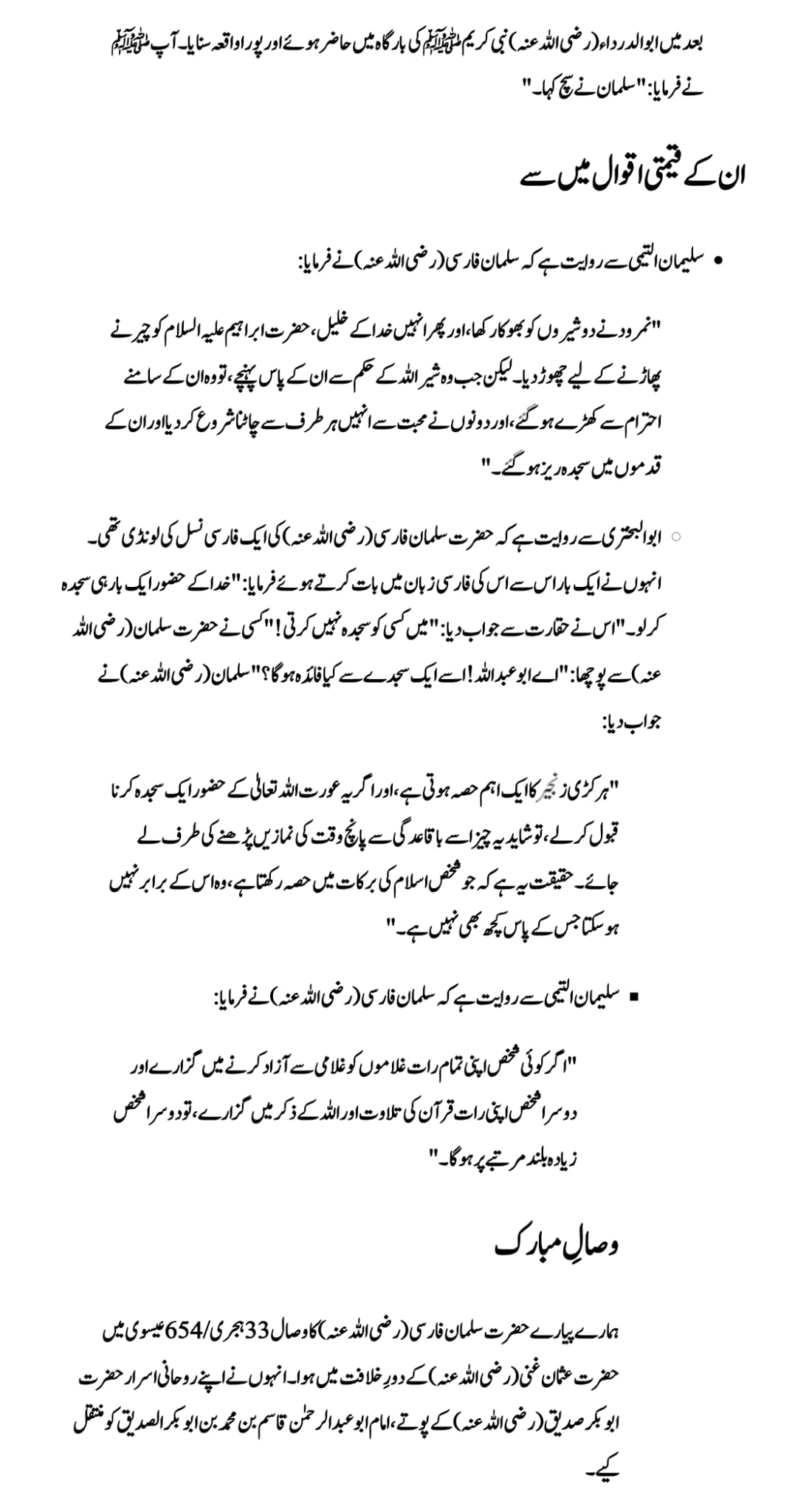
The Prophet (صلى الله عليه وسلم) made a bond of brotherhood between Salman (رضي الله عنه) and Abu ad-Darda al-Ansari (رضي الله عنه). Salman (رضي الله عنه) paid a visit to Abu ad-Darda’ (رضي الله عنه) and found Um ad-Darda’ (his wife) dressed in shabby clothes. He asked her why she was in that state. She said, “Your brother Abu ad-Darda’ is not interested in the luxuries of this world.” In the meantime Abu ad-Darda’ (رضي الله عنه) came and prepared a meal for Salman (رضي الله عنه). Salman (رضي الله عنه) requested Abu ad-Darda’ (رضي الله عنه) to eat with him, but Abu ad-Darda’ (رضي الله عنه) said, “I am fasting.” Salman (رضي الله عنه) said, “I am not going to eat unless you eat.” So Abu ad-Darda’ (رضي الله عنه) ate with Salman (رضي الله عنه). When it was night and a part of the night has passed, Abu ad-Darda’ (رضي الله عنه) got up (to offer the night prayer), but Salman (رضي الله عنه) told him to sleep and Abu ad-Darda (رضي الله عنه) slept. After some time Abu ad-Darda’ (رضي الله عنه) again got up but Salman (رضي الله عنه) told him to sleep. When it was the last hours of the night, Salman (رضي الله عنه) told him to get up then, and both of them offered the prayer. Salman (رضي الله عنه) told Abu ad-Darda’ (رضي الله عنه), “Your Lord has a right on you, your soul has a right on you, and your family has a right on you. Abu ad-Darda’ (رضي الله عنه) came to the Prophet (صلى الله عليه وسلم) and narrated the whole story. The Prophet (صلى الله عليه وسلم) said, “Salman has spoken the truth.”
From His Sayings
Sulaiman al-Teemi narrated that Salman al-Farsi (رضي الله عنه) said:
Nimrod starved out two lions, and then released them to devour God’s Cherished friend, Abrahamعلیہ السلام. But when the lions reached him and by God’s leave, they stood before him in reverence, and they both lovingly licked him all over and prostrated themselves at his feet.
Abi al-Bakhtari narrated that Salman al-Farsi (رضي الله عنه) had a female servant of Persian descent and he once spoke to her in her Persian tongue saying, “Prostrate yourself even once before God.” She replied with disdain, “I do not prostrate to anyone!” Someone asked Salman (رضي الله عنه), “O Abu Abd Allah, what would she benefit from a single prostration?” Salman (رضي الله عنه) replied, “Each link is an important part of a chain, and perhaps should this woman accept to offer a single prostration before God Almighty, then this may lead her to regularly engage in offering the five times prayers. In fact, one who has a share in the blessings of Islam is not equal to someone who has naught of it.”
Sulaiman al-Teemi narrated that Salman al-Farsi (رضي الله عنه) said:
If a man spends his entire night freeing slaves from bondage and another man spends his night reading the Quran and invoking the remembrance of God (dhikr), the second man would be in a higher state.
His Passing
Beloved Salman al-Farsi (رضي الله عنه) passed away in 33 AH/654 CE during the reign of Uthman (رضي الله عنه). He passed his secret on to Abu Bakr’s (رضي الله عنه) grandson, Imam Abu Abd ar-Rahman Qasim ibn Muhammad ibn Abu Bakr as-Siddiq رضي الله عنه